
Four Automakers Power 96% of Electric Two-Wheeler Growth (TVS, Bajaj, Hero and Ather Drive)
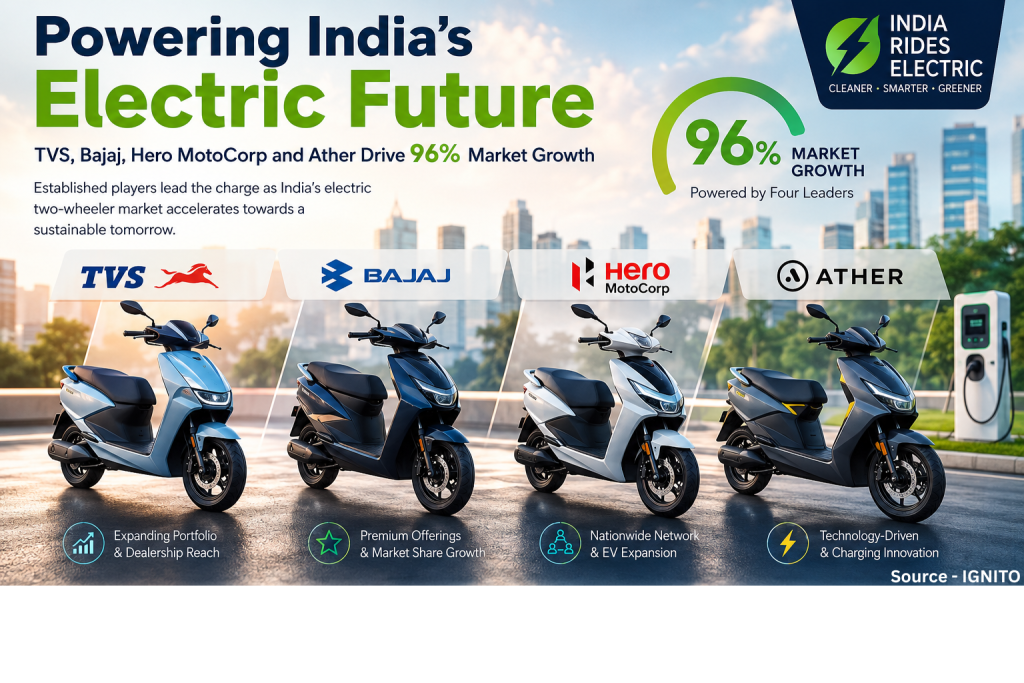
Four Automakers power TVS Motor Company, Bajaj Auto, Hero MotoCorp and Ather Energy accounted for 96% growth in India’s electric two-wheeler (E2W) Market,we see increased dominance of established manufacturers as competition is intensified in the country’s fast-growing electric mobility sector. These four companies have a strong performance and this reflects a shift in consumer preference. They are inclined towards trusted brands with extensive dealer networks, reliable after-sale service and consistent product quality. The Industry verdict is that buyers are increasingly opting for established manufacturers as the (EV) market matures and purchasing decisions become more focused on reliability, battery performance and long-term ownership cost. The nation’s electric two-wheeler market has seen growth over the past few years due to rising fuel prices, growing environmental awareness, supportive government policies and rapid improvements in charging infrastructure. Electric motorcycles and scooters are very popular among urban commuters seeking affordable and sustainable transportation options. TVS Motor Company has strengthened its position through an expanding electric scooter portfolio and wider dealership reach, while Bajaj Auto has continued to gain market share with its premium electric offerings. Hero MotoCorp has accelerated its EV strategy by expanding its electric product lineup and leveraging its nationwide distribution network. Ather Energy, one of India’s earliest electric scooter manufacturers, has continued to attract customers through technology-focused products, connected features and investments in fast-charging infrastructure. Industry experts attribute the concentration of market growth among these companies to their manufacturing capabilities, financial strength and ability to scale production. Their investments in battery technology, software integration and charging ecosystems have also helped improve consumer confidence in electric mobility. Many small EV startups are facing problems to establish themself as competition is increasing due to the dominance of these leading manufacturers. They face problems in rising input costs, intense price competition and the need for continuous investment in research and development have made it difficult for small and new companies to establish. Many startups are now focusing on niche markets or regional expansion while larger players strengthen their nationwide presence. The government also plays a key role in accelerating electric vehicle adoption. Incentives for EV manufacturing, investments in charging infrastructure and policies promoting clean mobility have encouraged both consumers and manufacturers to embrace electric transportation. Industry observers believe continued policy support will remain essential to sustaining long-term market growth. There are challenges irrespective of the sector’s rapid gain. Limited charging sports in smaller cities, battery supply constraints and consumer concerns over resale value and charging convenience continue to influence purchasing decisions. However, improvements in battery technology, increasing localisation of components and expanding charging networks are expected to address many of these concerns over time. India’s electric two-wheeler market will maintain strong momentum as manufacturers introduce new models across different price segments. Rising urbanisation, higher fuel costs and increasing awareness of sustainable mobility are likely to support further adoption in both metropolitan and smaller cities. With TVS, Bajaj, Hero MotoCorp and Ather collectively driving nearly all of the market’s recent growth, the competitive landscape is becoming increasingly consolidated. As electric mobility enters its next phase of expansion, established manufacturers are expected to play a central role in shaping the future of India’s two-wheeler industry through continued investment in technology, product innovation and customer experience.
Sources: (THE HINDU)