

Modi Inaugurates Kaynes Chip Plant, Boosts India’s Tech Ambitions
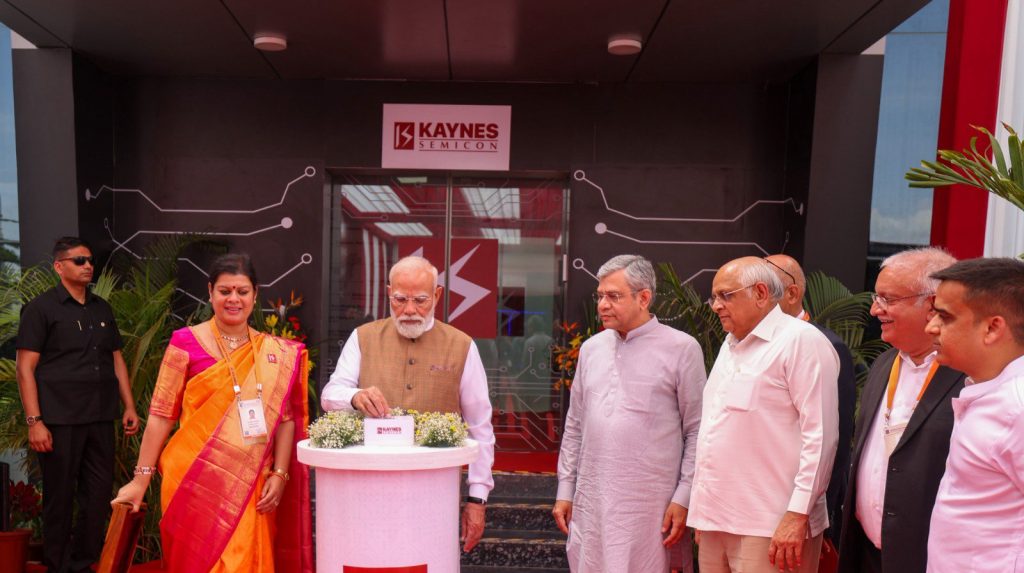
Photo Credit: @narendramodi
Prime Minister Narendra Modi on Tuesday inaugurated Kaynes Technology’s brand-new semiconductor plant in Sanand, Gujarat. This inauguration marks a significant step for India and its ambition to build a strong, self-reliant chip industry. Production’s already running, and India’s jumping right into the global electronics and chip supply chain.
Modi really leaned into the moment. It’s actually Sanand’s second major semiconductor launch in just a month, another huge facility opened back in February. Modi pointed to the rapid timeline as proof that India’s chip industry is really gaining steam. Kaynes, an Indian company, getting into chip manufacturing signals a big shift: the country wants to ramp up its own expertise and not just rely on others.
The plant’s main focus is on Intelligent Power Modules, those crucial components for electric vehicles and industrial hardware. A large chunk of what rolls out gets shipped abroad, plugging India straight into the global tech scene. Modi tied it all back to the “Make in India, Make for the World” idea, meaning Indian products aren’t just here for local customers, but also aim to help fix shortages across worldwide supply chains.
He was pretty upfront about it: India’s on its way to being a reliable chip supplier, even as the world juggles economic and political disruptions. Building up domestic semiconductor skills isn’t just good for jobs or GDP rather it’s a must for India’s independence in fields like AI, clean energy, defense, and general electronics.
Modi also circled back to the launch of the India Semiconductor Mission in 2021. He didn’t see it as just another government policy instead he called it the country’s confidence and long-term vision in action. Right now, there are projects worth over ₹1.6 lakh crore rolling out across India. They’re covering everything from chip design to actually building these things.
After ISM, the next agenda for the government is ISM 2.0, which promises more domestic production of chip-making equipment and materials. The goal of ISM 2.0 is to build a solid, full ecosystem that stands on its own and keeps India in touch with global partners.
Modi highlighted the push to grow India’s talent, too. Thousands are training in chip design and cutting-edge tech. Startups and universities are getting fresh support, so innovation and design get a real boost.
All signs point to India’s semiconductor market crossing $100 billion before we hit 2030. The Kaynes Technology plant feels like a big milestone and another step in India’s climb to become a global powerhouse in chips and electronics.
Source: PIB

What stood out to me most is how grounded this feels without losing substance. Thanks for writing this and making it available for readers like me.