
Tata Electronics Targets $30 Billion Scale as India’s Semiconductor Ambitions Accelerate

Tata Electronics is rapidly emerging as a central force in India’s semiconductor ambitions, with CEO and MD Randhir Thakur outlining a clear goal to scale the company into a $30 billion business over the next five years. The transformation has been swift and strategic. Since Thakur took charge in 2022, following discussions led by N Chandrasekaran, the company has grown from a ₹400 crore base to a ₹1.3 lakh crore revenue run rate, positioning itself among the top five entities within the Tata Group.
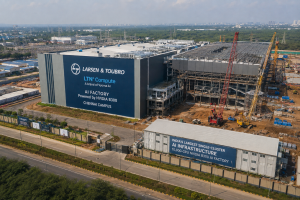
This rapid scale-up is underpinned by a focused expansion across the semiconductor value chain, including fabrication, packaging, and electronics manufacturing services. The company is building India’s first semiconductor fab in Dholera with an investment of ₹91,000 crore, alongside a ₹27,000 crore OSAT facility in Assam, while strengthening its EMS footprint through facilities in Hosur and acquisitions of global manufacturing units. Strategic collaborations with leading global players such as Intel, Qualcomm, Analog Devices, and Powerchip Semiconductor Manufacturing Corp have enabled access to technology, customers, and supply chains, with nearly 70% of the Dholera fab’s capacity already committed.
Despite the capital-intensive nature of semiconductor manufacturing, Tata Electronics has achieved profitability within a short period, generating over ₹4,000 crore in EBITDA and funding part of its expansion through internal accruals, while leveraging government incentives to support large-scale investments. The company’s strategy is built on aligning technology, talent, and capital, with a deliberate focus on proven semiconductor nodes that cater to the majority of global demand, particularly in sectors such as automotive and industrial electronics.
The broader context of this growth reflects India’s post-pandemic push for supply chain resilience and domestic manufacturing capability, supported by policy frameworks like the Production Linked Incentive scheme and the India Semiconductor Mission. While concerns around the scale of investments have been flagged within the group, including by Noel Tata, the company maintains that the fundamentals of the business are strong and demand-driven. Tata Electronics’ trajectory underscores a structural shift in India’s electronics ecosystem, with execution at scale now becoming the defining factor in realising its global ambitions.