
India To Establish First Indigenous Rare Earth Magnet Manufacturing Facility In Greater Noida
India’s First Rare Earth Magnet Plant To Be Set Up In Greater Noida
India is set to take a major step towards critical mineral self reliance with the establishment of the country’s first domestic rare earth permanent magnet manufacturing plant in Greater Noida. The facility will be developed by LOHUM, a leading producer of sustainable critical minerals and advanced battery materials.
The pilot manufacturing unit will be set up at the company’s Site 5 facility in Greater Noida and is expected to significantly strengthen India’s strategic capabilities in electronics, electric vehicles, renewable energy and defence manufacturing.
Rare earth magnets, especially NdFeB magnets made from Neodymium, Iron and Boron, are among the strongest permanent magnets used globally. These components are critical for products such as smartphones, televisions, smart wearables, electric vehicles, wind turbines, drones and advanced defence systems.
At present, India remains heavily dependent on imports, with nearly 80 to 90 percent of rare earth magnet requirements sourced from China. The absence of domestic manufacturing and limited recycling infrastructure has created a strategic vulnerability for the country’s rapidly expanding electronics and clean energy ecosystem.
The new project, backed by the Ministry of Electronics and Information Technology under the Electronics Component Manufacturing Scheme (ECMS), will involve an investment of around Rs 700 crore. The facility is expected to produce nearly 5,000 tonnes of rare earth magnets annually and will also receive a 25 percent government subsidy under the scheme.
Industry experts believe the development could become a major turning point for India’s ambitions to build resilient domestic supply chains for advanced electronics and mobility technologies.
According to company officials, the project aligns with the government’s larger vision of reducing import dependency on critical materials while promoting domestic value addition in strategic sectors.
The manufacturing process will rely on four major rare earth elements, Neodymium, Praseodymium, Dysprosium and Terbium. While India has reserves of Neodymium and Praseodymium, the country still faces supply limitations for Dysprosium and Terbium, which are essential for high performance, heat resistant magnets.
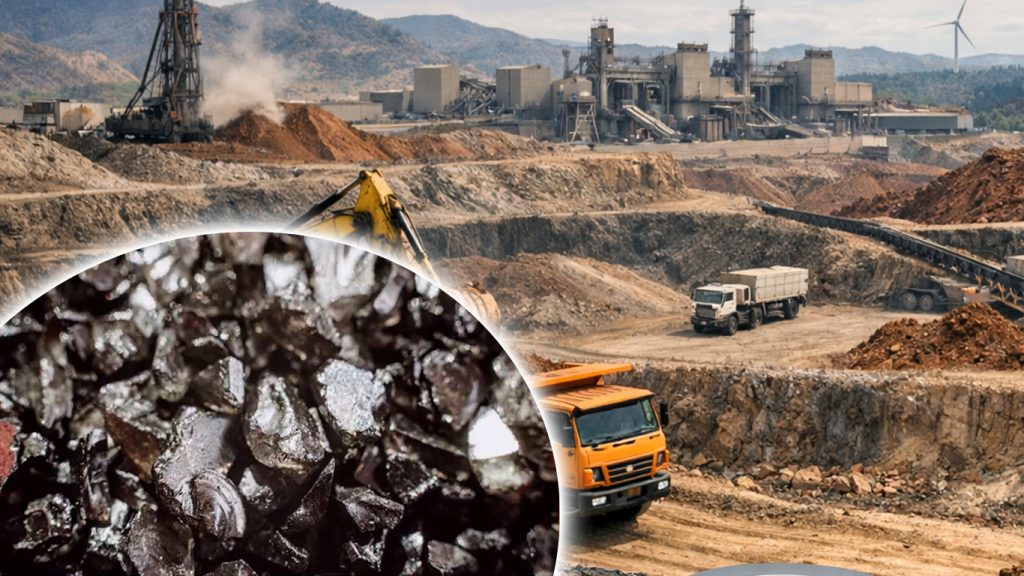
To address this challenge, the company plans to integrate recycling and urban mining into its sourcing strategy. Rare earth materials will be recovered from discarded smartphones, laptops, drones and other electronic waste collected through scrap dealers and recycling networks.
The initiative also aligns with India’s broader push towards circular economy practices and sustainable electronics manufacturing. Industry estimates suggest that nearly one kilogram of valuable rare earth material can be recovered from approximately 100 kilograms of magnet scrap.
The project is expected to support India’s long term ambitions of becoming a global hub for electronics manufacturing, EV production and clean technology innovation.