
India’s Smartphone Exports Power Electronics Manufacturing Surge
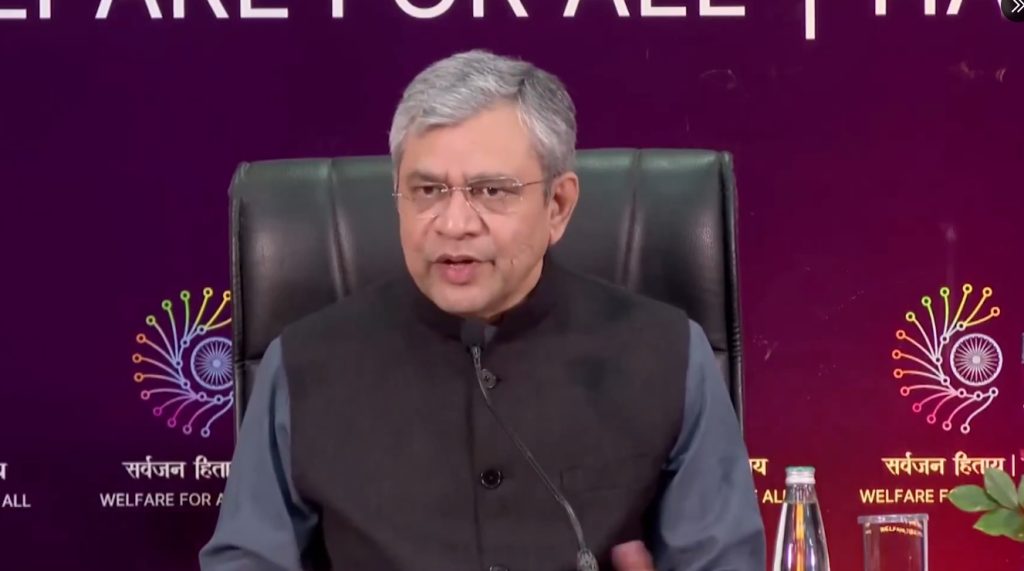
Photo Credit: @AshwiniVaishnaw
India’s electronics manufacturing sector is witnessing a major transformation, with smartphones emerging as the country’s leading export product. Speaking at an event, Union Minister Ashwini Vaishnaw said electronics exports have now entered the top three export categories, highlighting a major shift in India’s trade and manufacturing landscape.
Traditionally, India’s exports were dominated by petroleum products, gems and jewellery, textiles, and engineering goods. However, rapid growth in smartphone manufacturing and electronics production is now reshaping the country’s export ecosystem. According to the minister, smartphones have become India’s single largest exported item, reflecting the growing strength of domestic manufacturing and deeper integration with global supply chains.
India also exported nearly Rs 30,000 crore worth of electronics components to neighbouring countries during the last financial year. The development marks a significant transition for the country, which was once heavily dependent on electronics imports but is now steadily emerging as a global manufacturing and export hub.
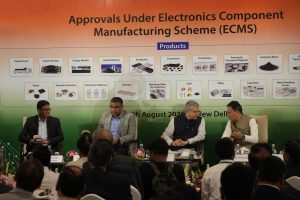
The growth has been supported by policy initiatives focused on strengthening domestic manufacturing, attracting investments, and building a globally competitive electronics ecosystem. Vaishnaw highlighted that India currently has 71 electronics component manufacturing facilities, many of which are in advanced stages of development and expected to support both domestic demand and exports.
He added that India is moving towards meeting complete domestic demand for several electronics components while also increasing participation in global value chains. A strong emphasis is being placed on quality improvement through global manufacturing practices such as Six Sigma and lean manufacturing to enhance efficiency and competitiveness.
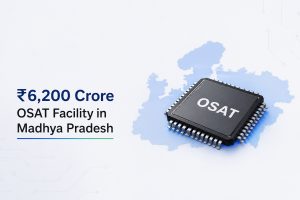
India’s semiconductor ambitions are also gaining momentum. According to the minister, two semiconductor facilities are already in commercial production, while a third plant is expected to begin operations in July and a fourth later this year. The government is also focusing on emerging technologies such as micro LED displays, with India expected to begin micro LED screen production within the next 22 months.
Alongside electronics manufacturing, India is witnessing significant railway infrastructure expansion. Railway capital expenditure has increased from around Rs 66,000 crore a few years ago to nearly Rs 2,72,000 crore in the previous financial year. Around 49,000 kilometres of railway tracks have been electrified, while nearly 36,000 kilometres of new tracks have been added to improve connectivity and reduce travel time.
The minister said faster rail infrastructure could shift passenger preference from air travel to railways on several short and medium-distance routes. Travel time between Bengaluru and Chennai is expected to reduce to nearly 78 minutes, while Delhi to Varanasi could take approximately 3 hours and 50 minutes after planned upgrades.
The rapid rise of electronics exports, combined with infrastructure expansion and advancements in semiconductor manufacturing, reflects India’s broader transition towards becoming a globally competitive manufacturing economy. With smartphones leading exports and electronics production capacity expanding rapidly, India is steadily strengthening its position as a major global hub for electronics manufacturing and advanced technology development.