
Tata and Foxconn Drive India’s Electronics Manufacturing Surge
Photo Credit: @HonHai_Foxconn
India’s electronics manufacturing sector is entering a new phase of growth, powered by the rapid expansion of Tata Electronics and the continued scale of global giant Foxconn. Together, these companies are playing a defining role in positioning India as a key player in global supply chains.
Tata Electronics has emerged as a major force, expanding its workforce to nearly 75,000 employees from around 15,000 just two years ago. This sharp growth reflects the increasing capability of Indian firms to take on large-scale manufacturing responsibilities that were once dominated by multinational companies.
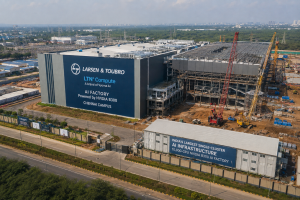
The shift signals a deeper transformation in India’s industrial landscape, where domestic companies are moving up the value chain and contributing significantly to global electronics production. Tata’s expansion, particularly in Tamil Nadu, highlights the growing strength of local manufacturing ecosystems.
At the same time, Foxconn continues to strengthen its presence in India through a massive investment in Karnataka. The company is developing a large facility near Devanahalli with an investment of around ₹20,000 crore, expected to employ up to 50,000 workers and produce nearly 20 million iPhones annually by 2026.
A notable feature of Foxconn’s operations is the high participation of women, who account for nearly 80 percent of the workforce at its iPhone manufacturing unit. Structured training programmes further support workforce readiness and skill development.
India’s electronics exports have also reached new highs, touching nearly $48 billion in the last financial year, driven largely by smartphone production and Apple’s supplier ecosystem.
An important shift is underway in global trade dynamics as well. India is increasingly exporting electronic components to China, reversing the traditional supply chain model where India largely depended on imports. This reflects improvements in domestic manufacturing capability and technology adoption.
Policy initiatives such as the Production Linked Incentive scheme and the Electronics Component Manufacturing Scheme have been central to this transformation. According to Amitabh Kant, exporting components to China at this scale was once unimaginable, underscoring the success of these policy measures.
Beyond industry metrics, the growth is translating into real economic impact through job creation, rising incomes, and greater workforce participation, especially among women. While challenges remain, particularly in semiconductor manufacturing, the direction of growth clearly positions India as an emerging global hub for electronics manufacturing.