
Samsung Ups Foldable Game as Apple Prepares to Enter India’s Nascent Foldable Market
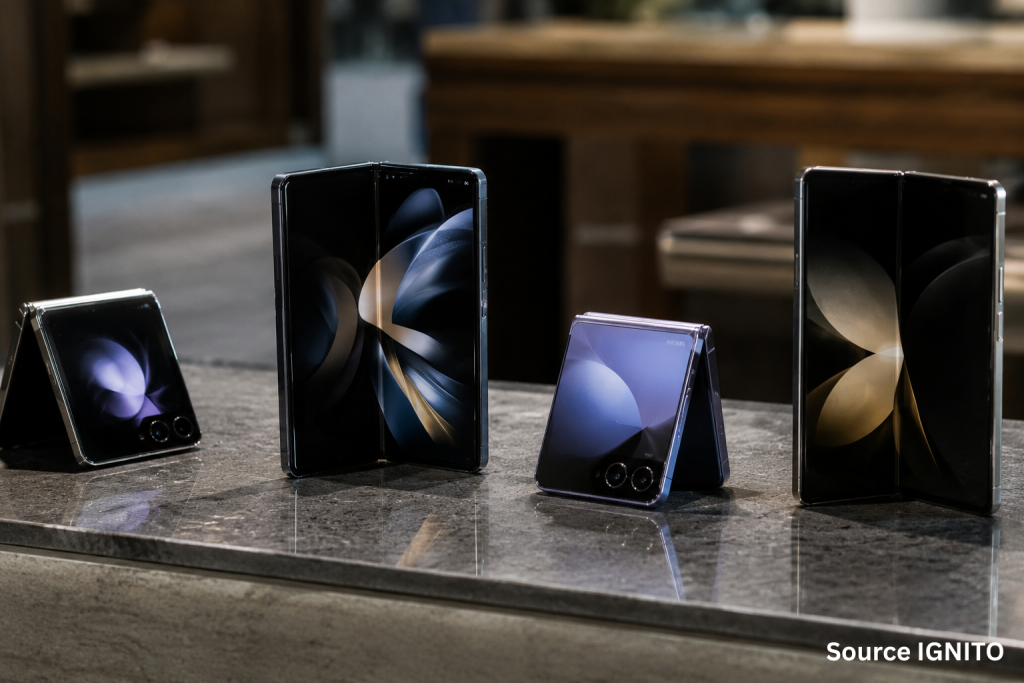
Samsung’s decision to introduce three new Galaxy Z foldable smartphones last week has intensified competition in India’s nascent foldable smartphone market, arriving just ahead of Apple’s widely anticipated entry into the segment. The Galaxy Z Fold8, Galaxy Z Flip8 Ultra, and Galaxy Z Flip8 alongside Motorola’s recently refreshed Razr foldable portfolio represent a deliberate move by established players to strengthen their foldable credentials before Apple enters a category it has so far stayed away from.
Apple’s iPhone Fold is expected to launch around September, alongside the iPhone 18 Pro. Analysts view the timing of Samsung and Motorola’s recent launches as more than routine annual upgrades, reading them as a calculated effort to consolidate market position and deepen consumer familiarity with the form factor ahead of what could be the segment’s most consequential product launch to date.
India’s cumulative foldable smartphone shipments are expected to cross 3 million units by the end of 2026, growing at a compound annual rate of nearly 80% since 2019. Annual foldable shipments are projected to rise to around 8% of total smartphone volumes this year, even as the broader smartphone market slows with overall phone shipments expected to decline 13-14% to approximately 133-134 million units due to rising memory and component costs. Samsung currently dominates India’s foldable market with an 89% share, while Motorola holds around 8%.
Analysts believe Apple’s significance in the foldable segment lies less in the volumes it will sell and more in the confidence it could bring to the category. Unlike other smartphone brands, Apple carries a large base of loyal ecosystem users who have specifically waited for a foldable iPhone before committing to the form factor. Prachir Singh, Senior Research Analyst at Counterpoint Research, noted that Apple’s entry is likely to be the biggest catalyst for the foldable market since Samsung introduced the modern foldable smartphone, adding that beyond its own sales, it will lend credibility to the category and accelerate adoption among iPhone users who have held off.
The heightened product activity comes at a moment when foldables remain one of the few growth pockets in an otherwise slowing global smartphone market, making the category strategically significant for manufacturers seeking premium segment differentiation.