
PLI Scheme Drives Record Electronics Output, Jobs Cross 1.85 Lakh

Photo Credit: @IndiaUNNewYork
India’s Production Linked Incentive (PLI) scheme for large-scale electronics manufacturing has turned out to be way more successful than anyone expected as it has exceeded it’s target in terms of production, exports as well as employment generation, Jitin Prasada, Union Minister of State for Electronics and IT, told Parliament.
Since it kicked off in 2020, the PLI scheme has sparked investments that shot past the projections. Investments have touched ₹17,519 crore, more than two and a half times what they originally aimed for. Production has crossed ₹11 lakh crore while exports are over ₹6.2 lakh crore. These numbers show India’s actually carving out its place in global electronics manufacturing.
Job creation has also been picking up steam. Over 1.85 lakh direct jobs have come out of this, and the two lakh milestone is right around the corner. The real success story, though, is in smartphones. India’s now the second-biggest mobile phone producer in the world. Manufacturing is ramping up like crazy, exports are surging, and India has gone from relying on imports to exporting more phones than it brings in.
By 2025, smartphones became India’s top exported product. That alone speaks volumes about how serious the government is about making India a global electronics hub.
And it’s not just smartphones. The whole electronics sector is seeing massive gains. Manufacturing has increased significantly in a decade while exports have also soared. Meanwhile, domestic value addition is also stronger now, around 18% to 20%, which means the supply chain has more local content in it.
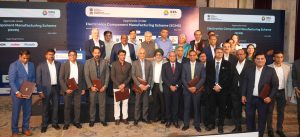
To keep things moving, the government launched the updated PLI 2.0 for IT hardware and the Electronics Component Manufacturing Scheme (ECMS). The endgame here is pretty clear: build up the local component base and cut down on imports.
The minister also said that India’s electronics push is about creating a thriving ecosystem, making the parts, putting together the finished products, competing globally, and building a tougher, more resilient supply chain.
Source: PIB