
Lenovo to Design, Make and Export AI Servers Globally from India
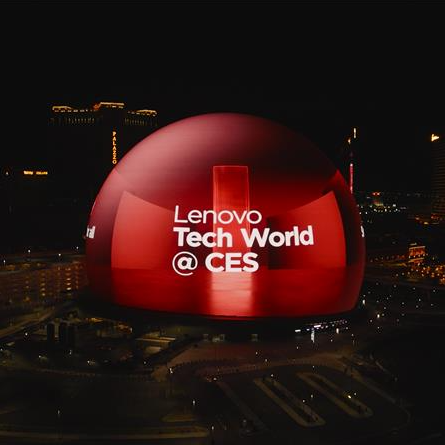
Photo Credit: @Lenovo
Global technology major Lenovo is preparing to turn India into a major export hub for its infrastructure and artificial intelligence (AI) server business, strengthening the country’s role in the global technology supply chain. Scott Tease, Vice President and General Manager, Infrastructure Solutions Group at Lenovo, told PTI in an interview during 2026 that the company plans to design and manufacture advanced AI servers in India for both domestic use and overseas markets. Speaking on the sidelines of CES 2026, Tease said Lenovo will leverage its Bengaluru development lab to design next-generation one- and two-socket AI server systems, which will then be manufactured at its Pondicherry facility.
Tease explained that these systems are expected to become the backbone of future AI workloads. While Lenovo’s initial focus remains on serving the Indian market, he said India’s skilled workforce, geographic advantage, and proven success in manufacturing smartphones and PCs make it a natural choice for global exports. He added that there is no reason why servers built in India cannot serve customers across the world in the coming years. Lenovo India has already been selected under the government’s Rs 17,000-crore IT hardware production-linked incentive (PLI) scheme, which further supports its expansion plans.
Addressing AI adoption among Micro, Small and Medium Enterprises (MSMEs), Tease highlighted the importance of a hybrid AI model. He said businesses do not need to invest heavily in large data centres, as model training can be outsourced to cloud or GPU-as-a-service providers in India. Once trained, AI models can run on lighter and more affordable hardware, making AI adoption easier and cost-effective for smaller firms. He also noted that natural language, such as English, is likely to become the primary way to interact with AI systems, making the technology more accessible.
On policy and sustainability, Tease praised India’s focus on Sovereign AI and domestic compute capacity, calling the government’s approach AI-friendly. He also said Lenovo is promoting liquid cooling technologies to reduce the high energy costs of AI data centres. Looking ahead, Tease stressed that by 2030, workforce readiness and AI skills will be the key factor deciding which countries and companies lead the AI era.
Source: The Economic Times