
Madhya Pradesh Signs ₹6,200 Crore Semiconductor Deal with Paras Semiconductors
In a major boost to India’s semiconductor ambitions, the Madhya Pradesh government has signed a Memorandum of Understanding (MoU) with Paras Semiconductors Pvt. Ltd. for the establishment of a state-of-the-art Outsourced Semiconductor Assembly and Test (OSAT) facility in the state. In this project RS 6,200 crore, investment will position Madhya Pradesh as an emerging hub for semiconductor manufacturing while contributing to India’s efforts to build a self-reliant electronics ecosystem.
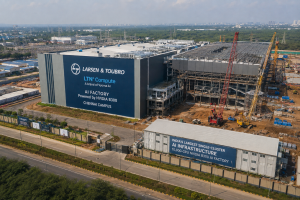
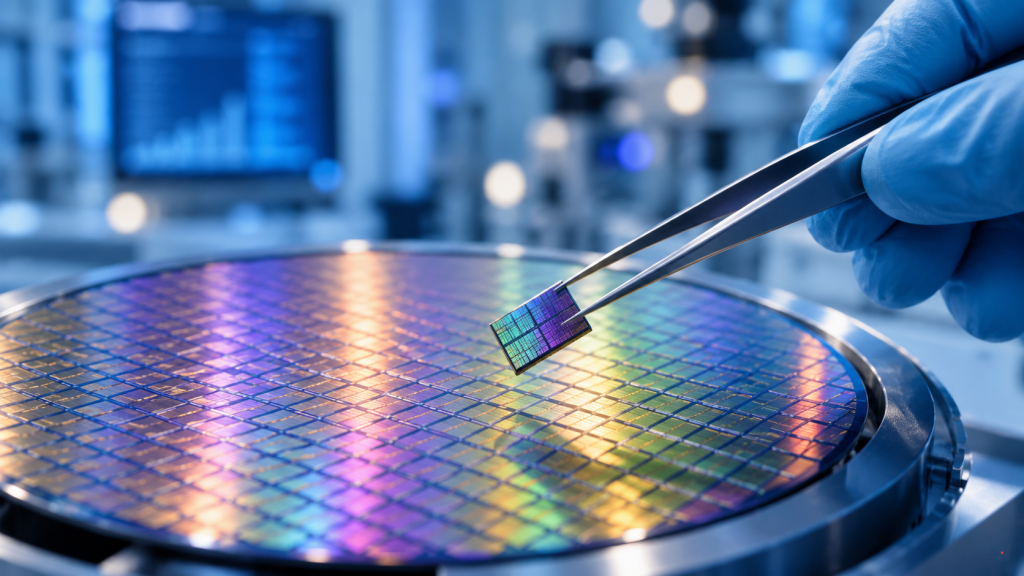
Greenfield facilities will be developed in the Indore Ujjain region, this industry is rapidly growing and has attracted significant investments in recent years. The main focus of the project is on semiconductor assembly, packaging, and testing-critical processes that transform fabricated silicon wafers into finished semiconductor chips ready for use in electronic devices.
Paras semiconductors, a subsidiary of Paras Defence & Space Technologies, plans to equip the facility with advanced packaging technologies, including 2.5D and 3D packaging, chiplet integration, hybrid bonding, wafer bumping, flip-chip assembly, and reliability testing. The production of high-performance semiconductor chips used in consumer electronics, automotive electronics, telecommunications, aerospace, defence, artificial intelligence, and healthcare is becoming more and more dependent on these technologies.
State government officials described the investment as a milestone for Madhya Pradesh’s industrial development strategy. The initiative is in line with the state’s semiconductor Policy 2025, which seeks to draw investments in electronics, semiconductor manufacturing, and other high-tech sectors. Nearly 50 acres of land in the Ujjain-Indore corridor have been set aside by the government to support the project, offering the infrastructure and policy support required for the proposed facility.
Significant job possibilities in the area are anticipated as a result of the investment. In addition to providing thousands of indirect employment opportunities in construction, logistics, supply chains, equipment maintenance, and ancillary industries, official estimates indicate that the OSAT facility might provide over 2,500 direct jobs. By working with academic institutions and technical training facilities, the project is also anticipated to promote the growth of skilled workforce in semiconductor technologies.
The investment coincides with the India Semiconductor Mission (ISM), an initiative by the Indian government to actively promote semiconductor production. The goal aims to make India a global center for semiconductor design and manufacture through financial incentives and policy support. By strengthening the nation’s backend manufacturing capabilities, projects like the planned OSAT plant in Madhya Pradesh support these national ambitions.
Private investors’ increasing faith in the state government’s industrial ecosystem is also reflected in the statement. The state has been able to draw investments in the fields of electronic, information technology, renewable energy, and sophisticated manufacturing because of improved infrastructure, investor friendly legislation, and strategic linkages.
Once operational, the RS 6,200 crore OSAT facility is anticipated to significantly contribute to both boosting India’s position in the global electronics supply chain and satisfying the growing demand for semiconductors worldwide. The initiative strengthens Madhya Pradesh’s position as a prominent player in India’s high-tech industrial landscape and represents another significant step toward realizing the nation’s goal of becoming a major semiconductor manufacturing location.